

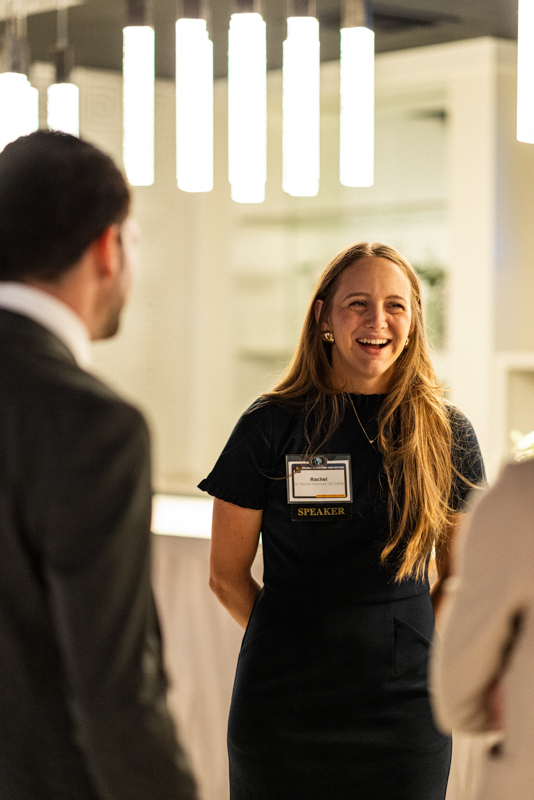
Rachel Hytovick ’20 ’24MSAE ’25PhD spends her days working on hypersonic propulsion, a technology that, in the next 25 years, could power a flight from New York to London in less than 15 minutes.
As an alumna and now a UCF postdoctoral scholar, Hytovick is helping to define a new frontier in air travel, which will also have applications in the aerospace and defense industries.
Hytovick earned her bachelor’s, master’s and doctoral degrees in aerospace engineering from UCF’s College of Engineering and Computer Science. After graduating in December, she joined the Center of Excellence in Hypersonic and Space Propulsion, or HyperSpace Center.
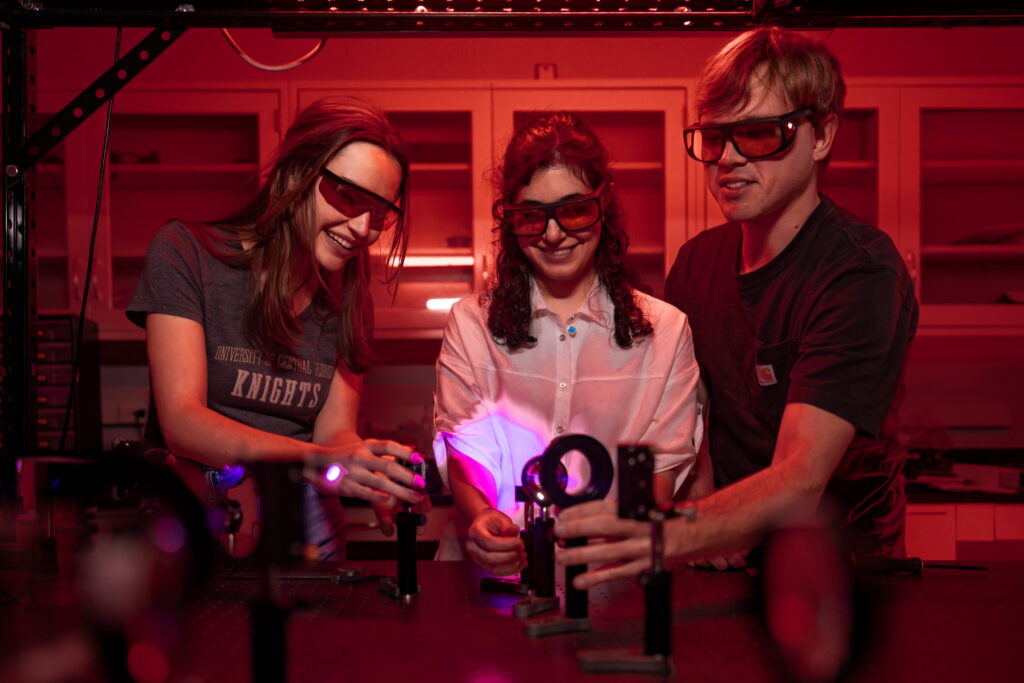
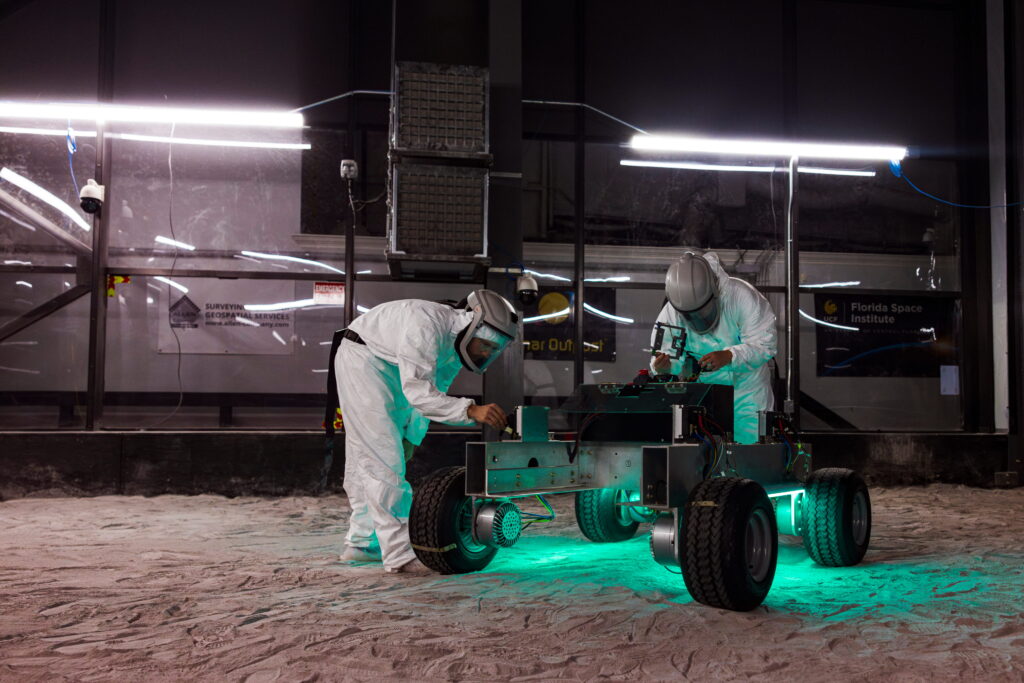
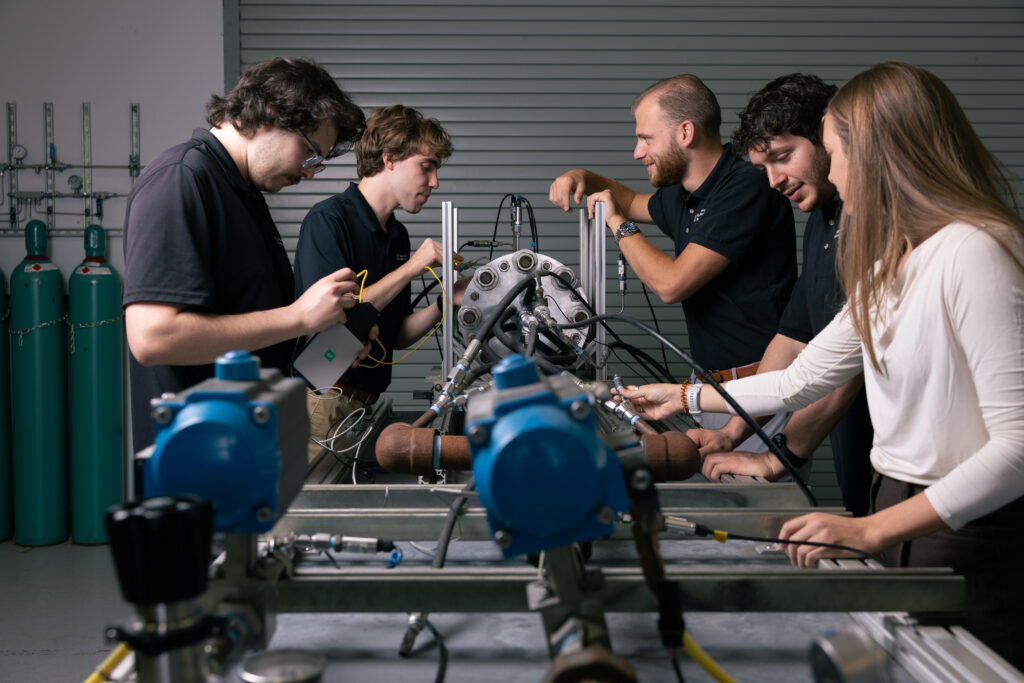
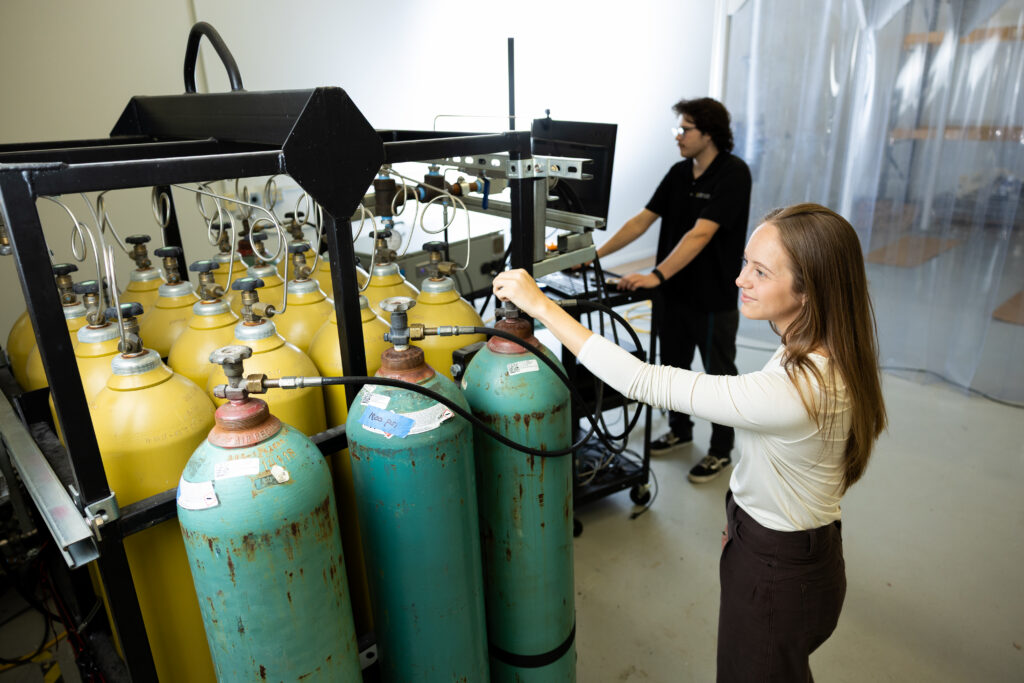
This first-of-its-kind partnership between UCF and the U.S. Air Force Office of Scientific Research provides a 50,000-square-foot research facility, consolidating labs across campus into a space filled with science. There, Hytovick and other postdoctoral scholars, faculty, students and researchers are making incredible progress in hypersonic technology.
Mapping Out Her Flight Plans
Hytovick’s dream of becoming an aerospace engineer started early.
“I was born a scientist,” she says. “As a kid, I loved science fair projects, I tested which crayons melted the fastest in the oven, and I was fascinated watching the rockets taking off from the Space Coast.”
She recalls seeing wind turbines for the first time on a family trip to Wyoming when she was 11, and they piqued her curiosity.
“I asked my dad what would happen if the blades on the turbines had different shapes. I wondered how that might affect the energy they generated,” says Hytovick, whose father was an engineer. “When we got home, he and I built a wind tunnel in our backyard. We crafted blades of different shapes, tested them and measured the energy they produced. That’s where my interest in engines started.”
Today, Hytovick specializes in aircraft engine design and propulsion, and she is on a mission to revolutionize air travel, envisioning planes that will travel at hypersonic speeds of up to 13,000 miles per hour.
“The work I’m doing now is really the continuation of a lifelong passion, and I’m so excited about the discoveries ahead,” she says.
The Power of UCF Innovation
Hytovick chose UCF because of its trailblazing aerospace engineering program. As an undergrad, she became interested in hypersonic propulsion, so when it was time to apply for graduate school, she researched top programs in the field.
“After attending lots of conferences, taking part in presentations, and connecting with engineering students and faculty across the country, it was clear that UCF was pushing the most innovation in aerospace engineering and doing the most exciting work in hypersonics by a longshot,” she says. “So I stayed, and there’s no place I’d rather be.”
“UCF is the leader in hypersonics here in the U.S., and we’re at the forefront globally as well,” Hytovick says. “I work with some of the most amazing minds anywhere, both faculty and students, and I’ve had the opportunity to study, learn and conduct groundbreaking research alongside many of them.”
Breaking Through
In 2021, Hytovick and the team at the Propulsion and Energy Research Lab, led by hypersonics expert and Professor Kareem Ahmed, Ph.D., discovered how to harness hypersonic explosions in a controlled way. That was a major breakthrough, leading them to their current efforts to stabilize a hypersonic engine in their lab.
Internal combustion engines have been around for 200 years, and they still power everything from tractors to automobiles and even spacecraft. Hytovick describes combustion engines as being like a flame – a slow burn. By contrast, hypersonic engines set off a chain of explosions, which create a lot more energy and speed.
“I like to say that I study fire, and how to make fire happen faster. If it can happen faster, we can get to places faster,” she says. “So now that we can harness hypersonic energy, our task is to stabilize that energy so it can be used to power flight. That’s the work that I’m leading.”
With an award from the Department of Defense, Hytovick and the rest of Ahmed’s team are conducting research and a series of flight tests over the next five years to learn how to use hypersonic energy in a safe and stable way, to ultimately power rocket boosters on airplanes.
The Power of Connection
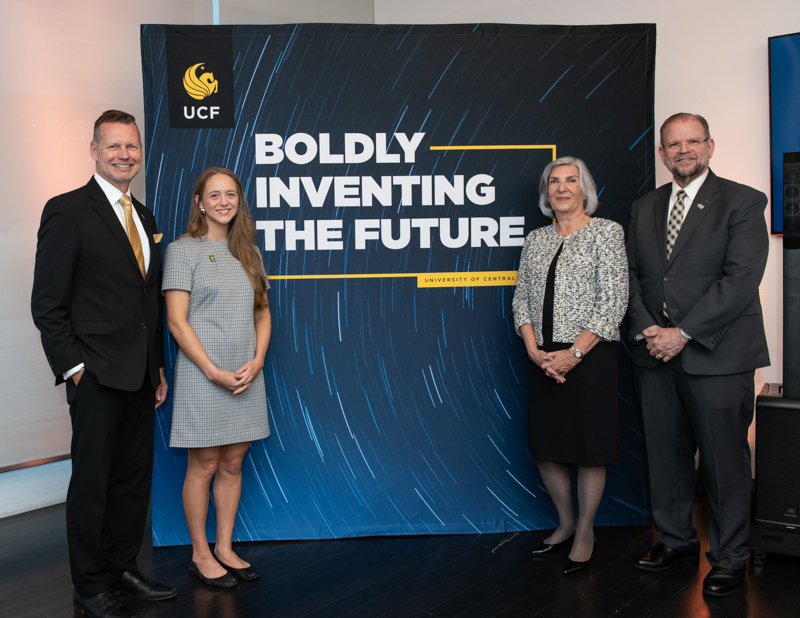
Hytovick shared her success story at UCF’s Boldly Inventing the Future events in Washington, D.C., and South Florida, inspiring university alumni, donors and leaders about the future of UCF as part of the Go For Launch campaign.
Go For Launch invites investment that helps propel discovery and innovation across the university, amplifying the power of a UCF education and its impact today and for generations to come.