

Martin “Dean Marty” Dupuis has built his career around a simple but powerful idea: when you raise expectations, you expand what’s possible.
Martin “Dean Marty” Dupuis has built his career around a simple but powerful idea: when you raise expectations, you expand what’s possible.
As senior associate dean of UCF Burnett Honors College, Dupuis works with students who are driven, curious and eager to make an impact. But his focus extends beyond academic achievement. He is intent on helping students see further, think bigger and step into opportunities they may not have imagined for themselves.
“Talent is everywhere,” Dupuis says. “Opportunity is not always. Our job is to close that gap.”
That belief didn’t begin at UCF. It took shape years earlier, through experiences that showed him how access and support could change a person’s trajectory.

As a college student, Dupuis was involved in fraternity-led philanthropic efforts, where he saw how collective action could rally people around a shared purpose. What began as service evolved into something more formative when a close friend launched a charitable foundation and asked for his help navigating the legal details.
Working through the structure of the foundation — how it would be organized, sustained and positioned to create meaningful impact — gave Dupuis a deeper understanding of philanthropy as both mission and mechanism. It was not just about generosity. It was about building something that could last.
By the time he arrived at UCF, that perspective was not theoretical. It was lived.
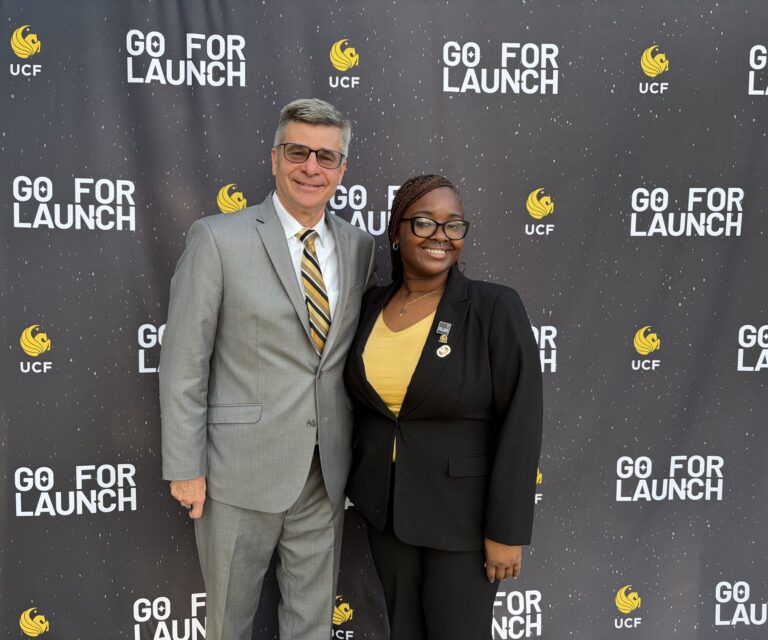
Today, that experience informs his role on the Campus Leadership Team for UCF’s Go For Launch campaign. For Dupuis, philanthropy is not simply about support. It is about creating systems that expand access and accelerate opportunity at scale.
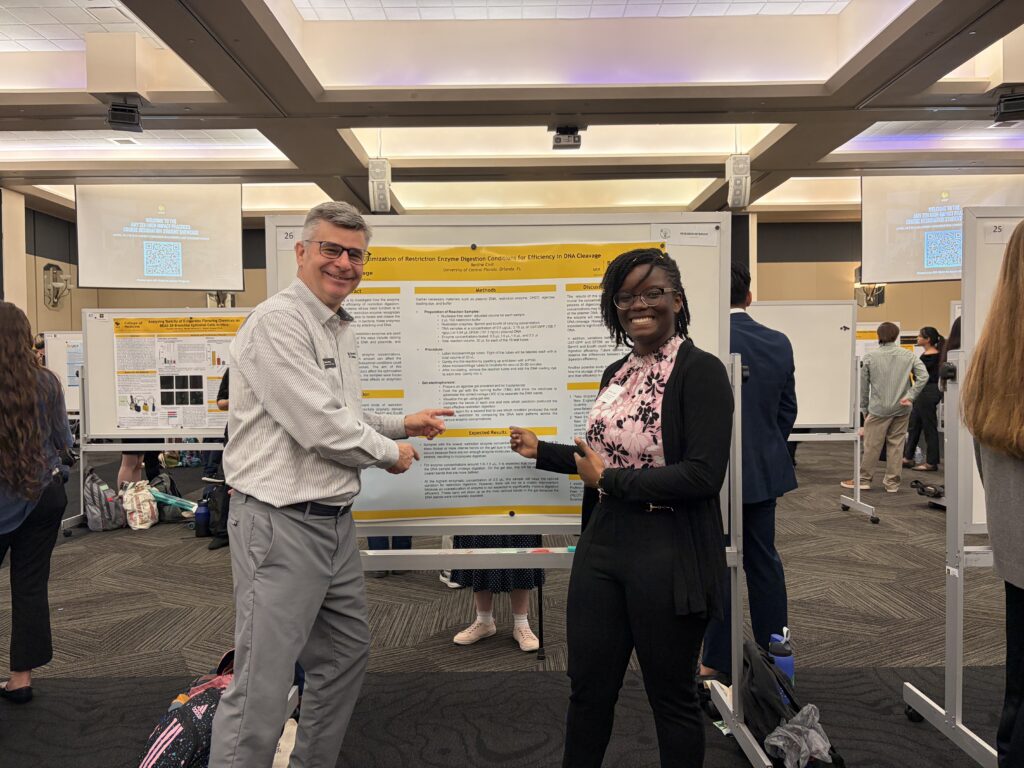
At Burnett Honors College, that philosophy is already at work. Students are immersed in an environment that emphasizes interdisciplinary thinking, research and collaboration. They are encouraged not only to excel, but to question, explore and engage with complex challenges.
“We want students to recruit and develop students who are not just successful, but impactful,” Dupuis says. “People who can think critically, communicate clearly and adapt in a rapidly changing world.”
Under his leadership, honors education is not defined by exclusivity, but by possibility. Dupuis is committed to ensuring that high-achieving students from all backgrounds can access the kinds of experiences that shape confidence and capability, from undergraduate research to global learning opportunities.
That commitment aligns closely with the ambitions of Go For Launch, which calls on UCF to accelerate discovery and expand opportunity across disciplines. For Dupuis, honors education plays a critical role in that vision, serving as both a model and a proving ground for innovation.
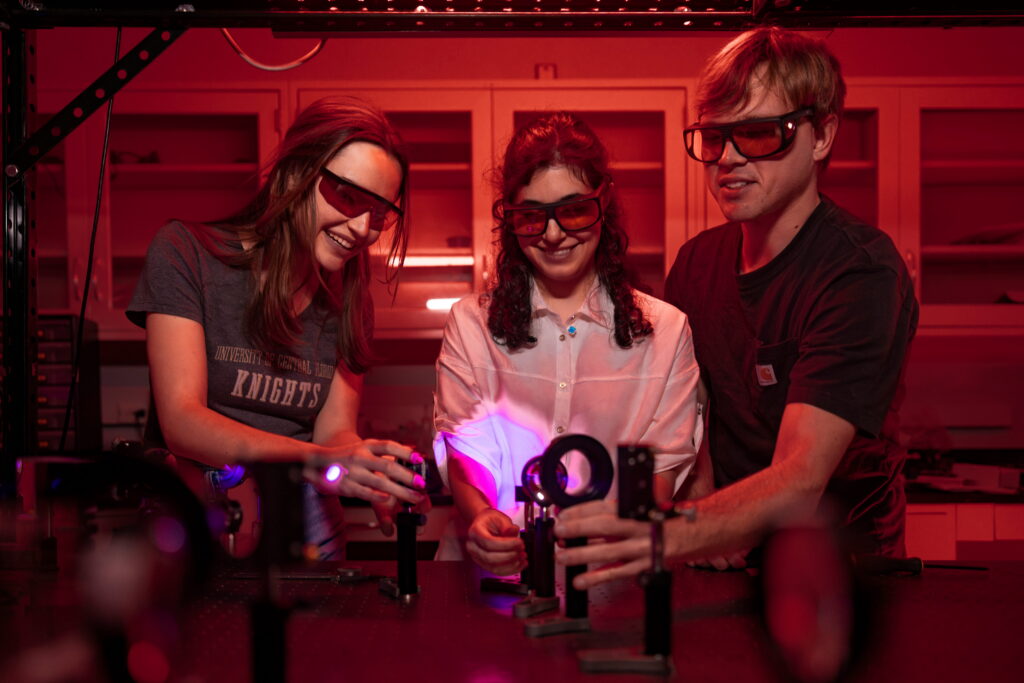
He points to undergraduate research as one of the most transformative elements of the honors experience. When students work alongside faculty to tackle real-world problems, they begin to see themselves differently.
“That moment when a student realizes they can create knowledge, not just consume it, that is transformative,” he says.
Expanding access to those moments is a priority — and one that depends on strong partnerships. Through the campaign, Dupuis sees opportunities to invest in scholarships, research initiatives and programs that bring honors-level experiences within reach for more students.
“Excellence should not be limited,” he says. “We have to make sure that students from all backgrounds can step into these opportunities.”
Colleagues describe Dupuis as thoughtful and forward-looking, a leader who understands both the big picture and the individual journey. That balance is evident in how he approaches a rapidly evolving higher education landscape.
For Dupuis, Go For Launch represents more than a campaign. It is a shared commitment to shaping what higher education can become when access, excellence and innovation are intentionally aligned.
The scale may be larger now, the reach broader, but the foundation of his work remains the same: a belief that when people invest in one another, opportunity expands.
“We are a university that was built to respond to need,” he says. “Now we have the chance to anticipate what comes next and build for it.”